

One Day in Luxor: Ancient Temples, Royal Tombs and a Guide We Loved

Luxor is the kind of place where you spend the morning walking into royal tombs, the afternoon standing beneath enormous temple columns, and the time in between wondering how anyone managed to build all of this. Usually while searching for shade.
We arrived at the end of our Nile cruise, and Luxor gave us a spectacular final dose of ancient Egyptian history before we continued towards Hurghada. It was hot, packed with extraordinary sights, and made considerably better by our wonderful guide, Samar.
For our style of trip, one well-organised day in Luxor was enough. We saw the major highlights, felt we’d had an incredible experience and didn’t feel an overnight stay was necessary. Also read: Nile Cruise from Aswan to Luxor: Our Itinerary, Costs and Honest Review
Quick Guide:
Why Luxor Belongs on Your Egypt Itinerary
Modern Luxor occupies the site of ancient Thebes, one of Egypt’s great centres of power and religion. Its temples and burial grounds form the UNESCO-listed Ancient Thebes and its Necropolis.
The sights are spread across two sides of the Nile:
The West Bank: royal tombs and mortuary temples, including the Valley of the Kings and Hatshepsut Temple.
The East Bank: the great temple complexes of Karnak and Luxor.
That division has meaning. Ancient Egyptians associated the west, where the sun sets, with death and the afterlife, one reason burial grounds were placed on that side of the river.
Suddenly, crossing between the banks becomes more than travelling to the next attraction. You’re moving between different parts of how ancient Egyptians understood their world.
Book your Luxor activites on GetYourGuide for the best experiences at Luxor. You can download the app and use the code ROAMMANTICS5 to get 5% off your bookings.
Do You Need a Guide in Luxor?
Our Recommendation Is a Definite Yes
For us, a guide is essential to getting the most out of Luxor. You can visit independently; this is our recommendation, rather than an entry requirement.The buildings are impressive either way. But without someone explaining them, it’s easy to spend the day admiring beautiful things without understanding why they mattered.
A good guide helps you recognise the rulers, follow the stories in the carvings and understand how one site relates to another. That makes a huge difference when you’re visiting several places in one day. We’d pair that with transport between the sights. Luxor’s attractions are spread out, and in the heat, having the day organised is worth a lot.
Our Wonderful Guide Samar
We had Samar, and she was one of the highlights of our Luxor experience.
She made the history interesting and accessible, and we came away feeling we’d learned something rather than simply collected photographs of temples.We also described her as a bit of a celebrity in Luxor. She left that kind of impression on us: someone completely at home here, whose enthusiasm made the day better. We highly recommend her. If you’re planning a visit, we’ll leave her contact details below so you can enquire about availability, prices and what she can arrange. Samar Nagi: +201005324996.
One Day in Luxor: Our Recommended Sightseeing Route
Start early and group the West Bank sights together before heading to the East Bank. Your guide may adjust the order around crowds, opening times and your arrival arrangements.
If you’re arriving on a Nile cruise, check whether Luxor sightseeing is already included. Ours was, so we didn’t need to book the same visits again.
Valley of the Kings: Inside the Pharaohs’ Tombs
The Valley of the Kings is where rulers of Egypt’s New Kingdom were buried in tombs cut into the hills. After seeing temples towering above ground, heading into these burial spaces gives you a completely different perspective. Corridors and chambers carry the imagery and religious ideas intended to accompany the dead into the afterlife.
The secluded location was deliberate. Tomb robbery was already a problem in ancient times, and hidden tombs offered an alternative to the conspicuous pyramids of earlier periods. Unfortunately, secrecy didn’t guarantee security.
This is a place to slow down. Look at the decoration, ask your guide what you should notice and give yourself time inside each tomb. You don’t need to visit every available one to have a brilliant experience. We’d prioritise a thoughtful selection over racing between entrances.

Does the Valley of the Kings Ticket Include Tutankhamun?
Don’t assume it does. Some tombs require separate tickets beyond standard admission.
Tutankhamun’s tomb is one example, currently listed at EGP 700 per foreign adult in addition to the main admission. Discuss the options with your guide before buying tickets.
And remember: this is his burial place. His famous treasures are a different visit, at the Grand Egyptian Museum in Giza.
Hatshepsut Temple: A Pharaoh with an Extraordinary Story
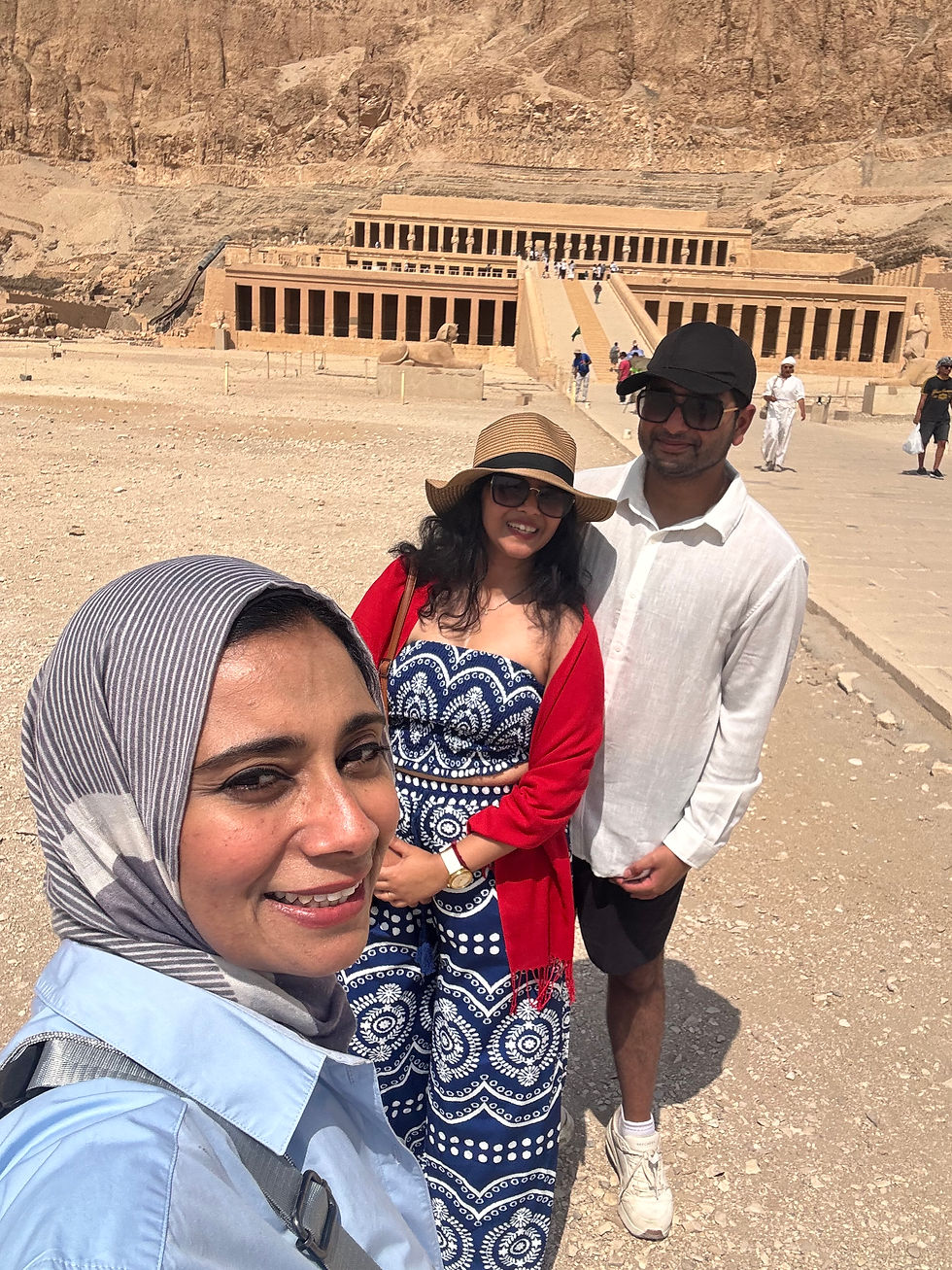
Hatshepsut’s temple at Deir el-Bahari rises in terraces beneath an enormous cliff face. The setting alone makes it a memorable stop.
But the person behind it is just as interesting.Hatshepsut was a queen who became pharaoh in the 15th century BC. Her mortuary temple was designed by Senenmut and included spaces dedicated to several gods, with Amun holding particular importance.
Its reliefs also record her expedition to Punt and present the religious and royal claims supporting her rule. This was architecture with a very clear message about who belonged in charge.
Samar’s explanations helped make that story part of the visit. You’re looking at much more than an elegant building against a dramatic backdrop.
This is also somewhere the heat deserves respect. Those wide, exposed spaces look wonderful in photographs, but you’ll appreciate water, a hat and sensible breaks.

Colossi of Memnon: Two Enormous Survivors
The Colossi of Memnon make a good shorter stop between the bigger visits.These huge seated statues represent Amenhotep III and once stood at his mortuary temple. They survive as reminders of a much larger complex, rather than monuments originally intended to sit alone beside the road.They’re impressive, but you don’t need to build a long visit around them. Stop, hear their story, take a look and continue.
Luxor has plenty more waiting.
Take a Proper Break Before the East Bank
By now, your head may be full of pharaohs and your body may be requesting air conditioning.
Listen to it.
A lunch break and time to cool down make the second half of the day much more enjoyable. This isn’t the place to treat an ambitious itinerary as a personal endurance challenge.
Refill your water, sit down and give yourself a little breathing room before the next temples.
Karnak Temple: A Forest of Ancient Columns
Karnak is one of those places where scale becomes difficult to describe until you’re standing inside it. It was a major religious centre, especially associated with Amun, and generations of rulers added to the complex. The Great Hypostyle Hall contains 134 columns. The twelve larger central columns rise to around 21 metres, which helps explain why walking through it feels so extraordinary. There’s a lot competing for your attention here: columns, reliefs, obelisks and the sheer size of the place. Having a guide helps you find a few stories within all that detail.Then give yourself time to simply look around. Some places deserve a moment without an explanation, a camera or a plan. Karnak is one of them.

Luxor Temple: Where the Stories Come Together
Luxor Temple makes a fitting final major stop.Its core was built under Amenhotep III, with later rulers, including Ramesses II, adding their own contributions. It was connected to Karnak by a processional route lined with sphinxes.
During the Opet Festival, sacred images travelled from Karnak to Luxor Temple in a major religious procession. Knowing that connection makes the two visits feel like parts of the same story.That was one of the pleasures of having Samar with us. By the end of the day, we could follow relationships between places rather than treating each temple as a separate impressive building.

The Luxor Heat Is No Joke
We visited in September, and the heat was intense. It had a real effect on how much walking and sightseeing felt comfortable.
Our practical advice is straightforward:
Start early, particularly for the exposed West Bank sights.
Carry plenty of water and replenish it during the day.
Wear a hat, sunscreen and comfortable shoes.
Arrange transport between the attractions.
Take breaks, even if that means trimming the itinerary.
Don’t build your plan around the idea that you’ll happily walk everywhere. Distances and heat make that a very different proposition from wandering around a compact city centre.
You’ll enjoy the history more if you’re comfortable enough to pay attention to it.
Luxor Entrance Fees and Tour Costs
Our guides were included in the cruise package, but entrance tickets were extra. Check your own booking carefully: some tours include admission and others don’t.
These are the published foreign adult prices checked on 8 October 2026.
Attraction | Entrance fee |
Valley of the Kings — standard admission | EGP 750 |
Hatshepsut Temple | EGP 440 |
Karnak Temple, including its Open-Air Museum | EGP 600 |
Luxor Temple | EGP 500 |
Colossi of Memnon — roadside viewing area | Free |
The Ministry of Tourism and Antiquities publishes the four paid admission prices above. The roadside area at the Colossi is free to view. That gives a base entrance budget of EGP 2,290 per adult, excluding additional tomb tickets, transport, guide costs and any site extras.
Prices can change, so confirm them before visiting. Tips for your guide and driver are another separate consideration.
Is One Day in Luxor Enough?
For Our Trip, It Was
We felt one organised day was more than enough for the main highlights we wanted to see.
We had a wonderful guide, visited the major places on our itinerary and left feeling that Luxor had delivered something extraordinary.
That doesn’t mean you can see everything here in a day. If you want more tombs, smaller sites, museum visits or a gentler pace, staying longer makes sense.
But for our route, Nile cruise, Luxor sightseeing, then onwards to Hurghada as we didn’t feel we needed another night.
Do You Need to Stay Overnight?
We wouldn’t add an overnight stay purely because the itinerary seems to demand one. If your sightseeing and onward transport fit comfortably, a day visit can work well.
An overnight becomes more useful if you want an early start the following morning, a slower schedule or an evening visit without watching the clock.We didn’t need Luxor to be a hotel destination in its own right. Its history was the reason we were there.
What Are Luxor Evenings Like?
The evening atmosphere felt pretty chilled, especially compared with Cairo.
For us, Luxor wasn’t somewhere we wanted to spend extra nights for elaborate evening plans. A relaxed dinner and time by the Nile suited the mood, but we didn’t feel we were missing a big nightlife experience by moving on.That’s a preference, rather than a lack of places to stay or things to do. Travellers wanting a comfortable riverside stay and a slower pace may enjoy exactly what we chose not to extend.Our trip already had plenty of downtime on the cruise. In Luxor, we wanted the history and we got it in abundance.
Would We Recommend Luxor?
Without hesitation. It was a goldmine of history, from the royal tombs beneath the hills to Hatshepsut’s dramatic temple and Karnak’s enormous columns. And we’d recommend Samar just as enthusiastically. A good guide changes what you take away from these places, and she made our day feel special.For a trip like ours, we’d plan one early, well-organised day with a guide and transport, leave room for breaks, and continue onwards afterwards if the timings work. We arrived from the Nile cruise, spent the day immersed in ancient Egypt and left ready for Hurghada’s beaches. Luxor had more than earned its place in between.
Happy travels!


Comments