

The Best Day Trips from London in 2026 (That AreActually Worth Your Time)

Let’s be honest. London is incredible. But sometimes you need to breathe air that doesn’t
smell faintly of the Underground, and see a horizon that isn’t blocked by a glass skyscraper.
The good news? Some of England’s most jaw-dropping places are sitting quietly just an
hour or two outside the city, waiting to be explored.
Whether you’ve got a free Saturday, a visiting friend who’s already done Big Ben twice, or
you’re just desperate for a change of scenery, don't worry, this list has you covered. I’ve broken it down by vibe, so you can pick what suits your mood.
Quick Index:
Historic Cities & Landmarks
Windsor Castle : The World’s Oldest Inhabited Castle
Train: London Waterloo or Paddington → Windsor (approx. 30–40 mins)
Cost: Tickets from around £28 for adults (castle entry). Train return roughly £15–£25
Best for: History lovers, architecture nerds, royal family enthusiasts (and sceptics alike)
Use Code: ROAMMANTICS5 to get 5% discount.
Right, let’s start with a big one. Windsor Castle has been home to British monarchs for over
950 years. That’s not a typo. William the Conqueror built the original fortress here in the
1070s, which was chosen specifically because it was a day’s march from the Tower of London and sat on a commanding hill above the Thames. Every monarch since has added, renovated, or dramatically redecorated it. The result is less a single building and more a living museum of British history crammed into one very grand estate.
What to see: St George’s Chapel is genuinely stunning, it’s also where Prince Harry and
Meghan married in 2018, and also where ten British monarchs are buried, including HenryVIII. The State Apartments are worth your time if they’re open, and the view from the Long Walk (a dead-straight avenue stretching nearly three miles from the castle gates) is the kind of thing that makes you feel like you’re in a film.
Top tip: Book tickets online in advance. The queues on weekends are no joke, and the
castle can close for royal events with very little notice. Check official website for opening times and schedule. You can also book your day tours here, which we highly recommend.
Day tour from London to Windsor, Stonehenge, Bath and Roman Baths day trip. Use Code: ROAMMANTICS5 to get 5% discount.

Oxford - Where Everyone Looks Like They’re in a Period Drama
Train: London Paddington → Oxford (approx. 1 hour) Cost: Train return from ~£20–£35.
Most colleges charge £5–£8 entry. Punting from ~£20 per boat/hour.
Best for: Architecture lovers, book lovers, people who enjoy feeling slightly underdressed
Oxford has been a university city since the 12th century, making it one of the oldest in the
English-speaking world. The story goes that English students were expelled from Paris in
1167 and ended up settling here. Today the city is home to 39 colleges, most of which you can wander into for a small fee and they are absolutely worth it.
Don’t try to see everything. You’ll exhaust yourself. Instead, pick two or three colleges
(Christ Church and Merton are particularly beautiful), walk along the river, and stop at the
Bodleian Library, one of the oldest libraries in Europe. If you’re a Harry Potter fan, Christ
Church’s Great Hall was the inspiration for Hogwarts’ dining hall. Punting on the River Cherwell is a must in summer. Yes, you’ll probably crash into a bank. Yes, it’s still worth doing.
Top tip: Go on a weekday if possible. Oxford is a working city, not a theme park, and it feels
much more alive (and less crowded) outside of peak weekend tourist hours. You can also check out guided day trip to Oxford and Cotswold from London, which we highly recommend. Use Code: ROAMMANTICS5 to get 5% discount.

Cambridge - Oxford’s Quieter, Arguably More Beautiful Rival
Train: London King’s Cross or Liverpool Street → Cambridge (approx. 50 mins–1 hour)
Cost: Train return from ~£20–£35. College entry varies, some are free.
Punting from ~£20– £25 per boat.
Best for: Same as Oxford, but with better flat landscapes and slightly fewer tourists
The Oxford vs Cambridge debate will never be settled, but Cambridge wins on one thing:
The Backs. This stretch of green riverbank behind the colleges, with the famous mathematical bridge and King’s College Chapel rising above the willows, is one of the most
quietly beautiful sights in England. King’s College Chapel took 70 years to build (1446–1515)
and the fan-vaulted ceiling is still considered one of the finest examples of Gothic
architecture anywhere in the world.
Isaac Newton studied here. Charles Darwin studied here. Stephen Hawking spent most of
his career here. Cambridge has an almost unfair concentration of history per square metre.
Like Oxford, punting is the thing to do, though in Cambridge it’s on the River Cam. Hire a
self-punt if you’re feeling brave (and competitive), or take a guided punt if you’d rather sit
back and actually enjoy the scenery.
Top tip: King’s College Chapel hosts a famous Christmas carol service (the Festival of Nine
Lessons and Carols) that’s broadcast worldwide every year. If you’re visiting in December,
it’s worth knowing, though getting a ticket is notoriously difficult. There isn't a direct day trip form London, so this one you'll have to do it the Hogwarts way by train.

Bath & Stonehenge - Two Icons, One Long Day
Train (Bath): London Paddington → Bath Spa (approx. 1 hour 25 mins)
Cost: Roman Baths entry ~£22–£25 adults.
Stonehenge ~£22–£25 adults.
Best for: History buffs, those who want to tick off two bucket-list spots in a day
Combined tours (Highly Recommend): Day tour from London to Windsor, Stonehenge, Bath and Roman Baths day trip. Use Code: ROAMMANTICS5 to get 5% discount.
These two are often combined on organised day tours, and honestly it works well because
they’re both remarkable for completely different reasons.
Bath was built by the Romans. Not inspired by the Romans, but actually built by them. They
called it Aquae Sulis and constructed an elaborate bathing complex around the natural hot
springs here around 70 AD. The spring water (which still bubbles up at 46°C today) was
considered sacred, and people came from across the Roman Empire to bathe and worship.
Walk around the Roman Baths museum and you’ll find coins, jewellery, and curse tablets
(yes, people would write curses on lead sheets and throw them into the water, so humans
haven’t changed much). The Georgian city built on top is equally beautiful with all honey-
coloured stone and sweeping crescents designed in the 18th century.

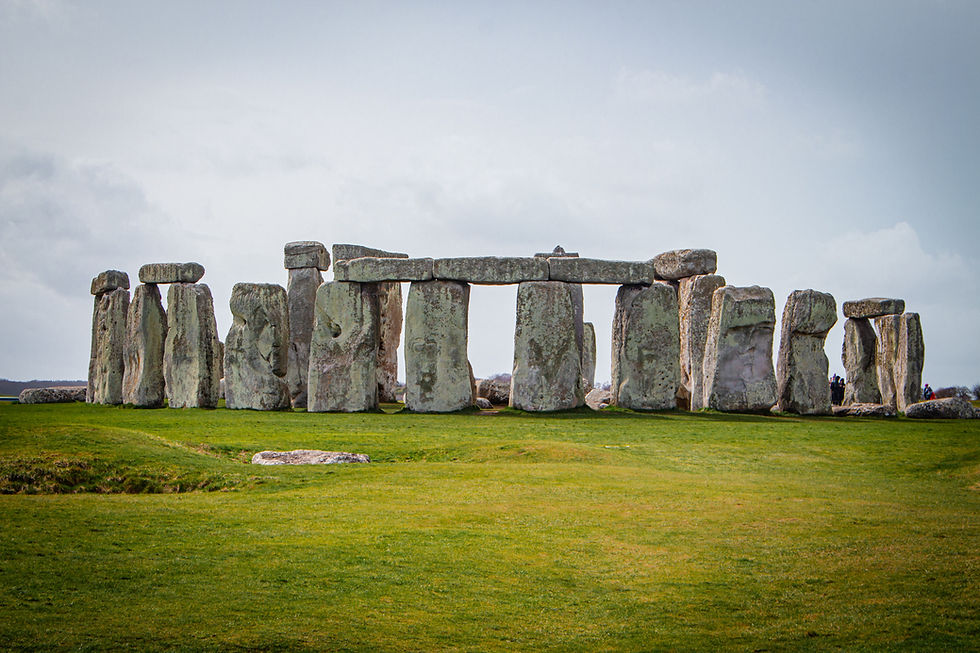
Stonehenge is older than you think. Construction began around 3000 BC, which means it
predates the Egyptian pyramids. Nobody knows for certain why it was built as theories range
from a burial site to an astronomical calendar to a place of healing. The mystery is part of
the appeal. Standing in front of those enormous stones on a grey English morning, you’ll understand why people have been making pilgrimages here for millennia.
Top tip: Booking a guided day tour ( Day tour from London to Windsor, Stonehenge, Bath and Roman Baths day trip) often works out cheaper than doing both independently, and
saves you the logistical headache of connecting transport. Use Code: ROAMMANTICS5 to get 5% discount.
Canterbury & Dover - Saints, Cliffs and One Very Famous Murder
Train (Canterbury): London St Pancras → Canterbury West (approx. 1 hour) Train (Dover):
London Victoria or St Pancras → Dover (approx. 1 hour 15 mins)
Cost: Canterbury Cathedral £16 adults. White Cliffs (National Trust) free
Best for: Those who want history with a dramatic coastal finish
Canterbury Cathedral is one of the most important religious sites in England. In 1170,
Archbishop Thomas Becket was murdered inside the cathedral on the orders of (or at least
with the encouragement of) King Henry II. The killing caused outrage across Europe and
Canterbury became one of the most important pilgrimage destinations in the medieval world is literally what Chaucer’s Canterbury Tales is about. The cathedral itself is breathtaking, with over 1,400 years of history layered into its stones.

Pair it with a trip to Dover and the White Cliffs for one of England’s most iconic views. The
cliffs stretch for about 8 miles along the coast and rise up to 110 metres above the Channel.
They’ve been the first (or last) sight of England for travellers, soldiers, and refugees for
thousands of years. On a clear day, you can see France from the top.

Top tip: These two are easily combined in a single day trip. Canterbury in the morning,
Dover and the cliffs in the afternoon. Factor in the walk along the cliff path — it’s about 2
miles from the visitor centre to the South Foreland Lighthouse and back, and completely
worth it. Checkout the day tour to Canterbury and Dover hills. Use Code: ROAMMANTICS5 to get 5% discount.
Seaside & Coastal Escapes
Brighton - London’s Favourite Beach Town
Train: London Victoria or London Bridge → Brighton (approx. 50 mins–1 hour) Cost: Train
return from ~£15–£30. Beach is free. Royal Pavilion entry ~£16 adults.
Best for: A proper seaside day out, good food, people-watching, general good vibes
Brighton has been London’s seaside escape since the Prince Regent (later George IV)
decided he fancied a beach house and built the absolutely bonkers Royal Pavilion in the
early 1800s. It looks like someone transplanted an Indian palace to the south coast of
England, which is more or less what happened. It’s gloriously strange and absolutely worth a
look inside.

The city itself is loud, colourful, independent and proud of it. The Lanes (a maze of narrow
alleyways crammed with independent shops, vintage boutiques, and restaurants) is where
you want to spend your afternoon. The beach is pebble rather than sand, which divides
people, but there’s something deeply pleasant about sitting on those stones with fish and
chips and watching the waves.
Brighton Pier is the classic postcard image as arcades, fairground rides, candy floss and
it’s exactly as cheerfully tacky as it sounds. Worth a walk even if amusement arcades aren’t
your thing.
Top tip: Brighton gets absolutely rammed on summer weekends. Go on a weekday, or go
early and grab a spot on the beach before the crowds arrive from London. From London: Seven Sisters and Brighton Full-Day Tour. Use Code: ROAMMANTICS5 to get 5% discount.
Whitstable - Oysters, Boats and Proper Seaside Charm
Train: London Victoria → Whitstable (approx. 1 hour 25 mins, with a change at Faversham)
Cost: Train return from ~£25–£35. Food is the main expense.
Best for: Foodies, people who find Brighton too busy, anyonewanting a quieter, more authentic coastal day
Whitstable doesn’t shout about itself. That’s part of the charm. This small fishing town on
the north Kent coast has been famous for its oysters since Roman times literally. The
Romans imported Whitstable oysters back to Rome as a luxury goods item. Today you can
sit at one of the harbour-side stalls and eat them fresh off the boat, which is a rather nice
continuation of a 2,000-year-old tradition.
The town is small enough to walk in an afternoon. The high street has independent shops
and no chain restaurants to speak of (a genuine rarity). The beach is quiet and working
fishing boats, crab pots, the smell of the sea and the sunsets over the Thames Estuary
are genuinely special.

Top tip: Go for the Whitstable Oyster Festival if you can. It usually runs in July and the
whole town turns out. Arrive hungry.
Seven Sisters & Eastbourne - Chalk Cliffs and Big Skies
Train: London Victoria → Eastbourne (approx. 1 hour 30 mins)
Cost: Train return from £20–£35. The cliffs themselves are free.
Best for: Hikers, photographers, people who want dramatic coastal scenery without the crowds of Dover.
The Seven Sisters are a series of chalk cliff headlands along the East Sussex coast, and they
are genuinely one of the most dramatic landscapes in southern England. Unlike the White
Cliffs of Dover (which you see from a distance), here you can walk right along the cliff edge, though do stay behind the markers, because the chalk genuinely does crumble.
The classic walk runs from Cuckmere Haven to Birling Gap, about 4 miles along the cliffs
with views across the Channel on one side and rolling South Downs on the other. It’s not
technically demanding but it is hilly in places. Wear proper shoes.
Eastbourne itself is a pleasant, slightly sleepy seaside town which is very different in character to Brighton with a good seafront and some excellent fish and chip shops.
Top tip: The light here in the late afternoon is extraordinary for photos. If photography is
your thing, aim to be on the cliffs between 3pm and sunset. You can combine the Seven sister and Brighton in a single day tour which is easier on the planning and pocket. Check you the tour here: From London: Seven Sisters and Brighton Full-Day Tour. Use Code: ROAMMANTICS5 to get 5% discount.

Countryside & Villages
The Cotswolds - The England Everyone Pictures
Best access: Organised tour from London, or train to Moreton-in-Marsh / Kingham then
local taxi/bus Cost: Day tours from £50–£80. Train + taxi combos vary.
Best for: People who want the full honey-stone-cottages-and-rose-gardens experience
The Cotswolds is a Area of Outstanding Natural Beauty covering about 800 square miles
across Gloucestershire, Oxfordshire, Wiltshire and beyond. The villages here is built from
the same warm golden limestone that gives the whole region its distinctive look which became wealthy in the medieval period thanks to the wool trade. England’s wool was the finest in Europe, and the Cotswolds produced much of it. The money built the churches, the manor houses, and the cottages that tourists now travel across the world to photograph.

Bourton-on-the-Water is often called the “Venice of the Cotswolds” (a stretch, but it ischarming, with a gentle stream running through the village centre). Castle Combe is so
picturesque it’s been used as a film location multiple times. Burford has a lovely high street
tumbling down to the river. Chipping Campden is arguably the most authentically
preserved.

The honest truth: the Cotswolds is genuinely hard to do justice to without a car. If you don’t
drive, an organised day tour from London is the most practical option and they’re well run.
Top tip: Avoid weekends in summer. This is one of the most visited regions in England and
the most popular villages get genuinely packed. A weekday in late spring or early autumn
gives you the scenery without the traffic jams. You can also Combine Oxford and Cotswold in a single day trip. Check here: Oxford and Cotswold from London, which we highly recommend. Use Code: ROAMMANTICS5 to get 5% discount.
Rye - A Medieval Town That Somehow Survived Intact
Train: London St Pancras or Charing Cross → Rye (approx. 1 hour 15 mins–1 hour 45 mins)
Cost: Train return from ~£25–£35. The town itself is free to wander; Rye Castle Museum £5.
Best for: Anyone who wants to feel like they’ve genuinely stepped back in time
Rye is remarkable. It’s a small hilltop town in East Sussex that looks almost exactly as it did
in the 14th century. Cobbled streets, timber-framed buildings, a Norman church at the top
of the hill, and a history involving pirates, smugglers, and French raids (the French sacked
Rye twice in the 1300s, which is the kind of detail that makes English history endlessly
entertaining).

Mermaid Street is the most photographed spot a steep, cobbled lane lined with ancient
buildings including the famous Mermaid Inn, which has been operating as a pub since 1420.
The smuggling gangs of the 18th century used to drink here openly, pistols on the table,
because they knew the local sheriff was too scared to touch them. The town is small enough to explore thoroughly in half a day, leaving time for a walk down to the Rye Harbour Nature Reserve and its bird-filled lagoons.
Top tip: Rye has some excellent independent restaurants and delis. It’s a good excuse to
make the trip a slow, leisurely one as you arrive late morning, eat well, explore the afternoon, and catch an evening train back.
Family & Entertainment
Hampton Court Palace - Henry VIII’s Party Palace
Train: London Waterloo → Hampton Court (approx. 35 mins) Cost: Train return from £10–
£20. Palace entry £28–£32 adults, £14–£16 children.
Best for: Families, history lovers, anyone with even a passing interest in Henry VIII
If you know anything about Henry VIII, you know he liked things big, loud, and expensive.
Hampton Court Palace is proof. He essentially seized it from his own Cardinal (Thomas
Wolsey) in 1529 when he decided he wanted it, and then spent the rest of his reign making
it grander. Six of his wives lived here at various points. Two of them Jane Seymour and
Catherine Howard are said to haunt it. Whether you believe in that sort of thing or not, the atmosphere in the Tudor kitchens and the great hall is genuinely impressive.
The gardens are vast and beautifully kept, and the famous hedge maze planted around
1700 is exactly as confusing as advertised. Children love it. Adults pretend they’re not
bothered and then get mildly panicked. It’s a whole thing.
Top tip: Allow a full day here. The palace is much larger than it looks from outside and
between the State Apartments, the kitchens, the gardens and the maze, you can easily fill
six hours without rushing.

Warner Bros. Studio Tour - The Making of Harry Potter
Train: London Euston → Watford Junction (approx. 20 mins), then shuttle bus to the studios
(~15 mins) Cost: Train return £10–£15. Studio tour tickets £55 adults, £47 children.
Best for: Harry Potter fans of all ages, families, anyone who wants to feel like a child again
This one needs no hard sell. The Warner Bros. Studio Tour in Watford is one of the most
visited attractions in England for very good reason, it’s genuinely brilliant. You walk
through actual sets (the Great Hall, Dumbledore’s office, the Forbidden Forest), handle real
props, see original costumes, and walk down Diagon Alley. The Butterbeer, which you can
drink in the backlot, tastes like butterscotch cream soda and is thoroughly worth it.
The entire Harry Potter film series was shot at Leavesden Studios over a decade. The level
of craftsmanship on display from the handmade wands to the scale model of Hogwarts
used for aerial shots is astonishing regardless of whether you’re a fan.
Top tip: Book tickets as far in advance as possible. This tour sells out weeks ahead,
especially during school holidays and weekends. There are time-slotted entries, so you
can’t just turn up. You're better off booking tour with transport to the studio. Check here for: the Harry Potter Tour in The Studio with transport. Use Code: ROAMMANTICS5 to get 5% discount.

Bicester Village - Luxury Shopping at Outlet Prices
Train: London Marylebone → Bicester Village (approx. 1 hour, direct) Cost: Train return £20–£30. Budget varies wildly depending on willpower.
Best for: Fashion lovers, bargain hunters, anyone who wants designer labels without full designer prices
Bicester Village is an open-air outlet shopping centre with around 160 boutiques selling
end-of-season and surplus stock from luxury and designer brands as it's typically at 30–70%
off retail prices. Think Burberry, Coach, Mulberry, Anya Hindmarch, and a long list of others.
It’s popular with both domestic visitors and international tourists (particularly from East
Asia, where it has a huge following).
It’s not a historically interesting day out. There’s no pretending otherwise. But if shopping is
your thing, or you’ve got visitors who want to do a big shop, it’s genuinely well set up and
the train connection from Marylebone is unusually direct and convenient.
Top tip: Go on a weekday morning. Weekends, particularly Saturdays, are extremely busy
and some queues for popular stores can be long. There’s a dedicated “Bicester Village” stop
on the Chiltern Railways line from Marylebone as it's hard to miss.
Getting Around: Practical Tips for 2026
Book trains in advance. UK train fares are dynamic, the earlier you book, the cheaper
they tend to be. Websites like Trainline, National Rail, or the individual train operators are
your best bet. An Advance ticket bought weeks ahead can be half the price of an Anytime
fare on the day.
Consider an Organised Tour for certain trips. For destinations like Stonehenge (limited
public transport), the Cotswolds (no easy train access), or a combined Bath/Stonehenge
day, a guided coach tour from London genuinely makes more logistical sense. Companies
like GetYourGuide run flawless tours which are highly recommended. Checkout: Is GetYourGuide Worth It in Europe? Honest Review (2026)
Use an Oyster Card or Contactless within London. Getting to your departure station is
part of the trip. Tap in and out with your bank card or an Oyster Card rather than buying
separate tube tickets.
Check opening times before you go. Windsor Castle, Stonehenge and Hampton Court
Palace all close for royal or special events. Canterbury Cathedral occasionally has services
that restrict tourist access. A quick check of the official website before you leave saves a lotof frustration.
Start early. Especially for Brighton, the Cotswolds, and Bicester Village on weekends. The
crowds build quickly and the experience is markedly better before midday.
Final Thoughts
The best thing about being based in London or even just visiting, is that you’re sitting in
the middle of one of the most historically and geographically rich parts of the world. Within
two hours in any direction, you’ve got 5,000 years of history, some of the most beautiful
coastline in Europe, ancient stone circles, royal palaces, and villages that look like they’ve
been lifted from a postcard.
You don’t need a week. You just need a good train connection and a plan.
Pick one. Go. The rest of England is waiting. Happy Travels!



Comments