

Málaga Beyond the Beach: A Different Way to Travel Southern Spain
- Akshay Umashankar
- Feb 13
- 9 min read

Updated: Mar 31
Why Málaga Is More Than a Beach Destination
When people think of Málaga, they usually imagine a relaxed coastal escape in southern Spain. Rent an Airbnb or book one of those all-inclusive beach resorts. Spend your days by the pool, cocktails arriving without effort, listening to waves crash against the shore of the Mediterranean Sea, and taking the occasional dip in the ocean. To be fair, that’s exactly what we had planned. A five easy days in Costa del Sol with sun, beach, and very little thinking. But Málaga had other plans for us. A Málaga beyond the beach!
When Expectations Meet Reality
The week before departure, the forecast looked perfect. Bright sunshine. Warm days. Classic southern Spain. But, the morning we left Ireland, everything changed.
Cloud cover rolled in. Occasional rain. Temperatures dropped. Strong winds that never really let up. For a brief moment, we even considered turning back, as jumping from one cold place to another didn’t feel particularly appealing. But we went anyway. And I’m glad we did!
We landed at Málaga Airport. Since this was meant to be a resort-focused trip, we hadn’t booked a car. Instead, we took the shuttle bus into the city centre and got off downtown.
One thing worth noting early: Málaga isn’t just one place. It’s a province, with multiple towns, cities, and coastal areas all grouped under the same name. Where you stay and how you move matters a lot.
First Stop: Churros, Obviously
It was already close to 11 a.m., and breakfast was non-negotiable. We walked down the main shopping street in the central district. It's a polished, busy, and noticeably expensive location, passing dozens of places selling churros. But we already knew where we were going. Casa Aranda. The most famous churro place in Málaga. You’ll know you’re close when you see the crowd. Fifty churro shops on the way, but only one packed with locals and tourists alike. Even on a cold, windy morning, we were lucky enough to get a seat.
Churros in Spain vary wildly by region—sometimes thick, sometimes thin, sometimes crisp, sometimes soft. These came with rich chocolate for dipping and a strong espresso on the side. Simple. Comforting. The perfect start to Málaga, even with the weather refusing to cooperate.

Resort Life (and Its Limits)
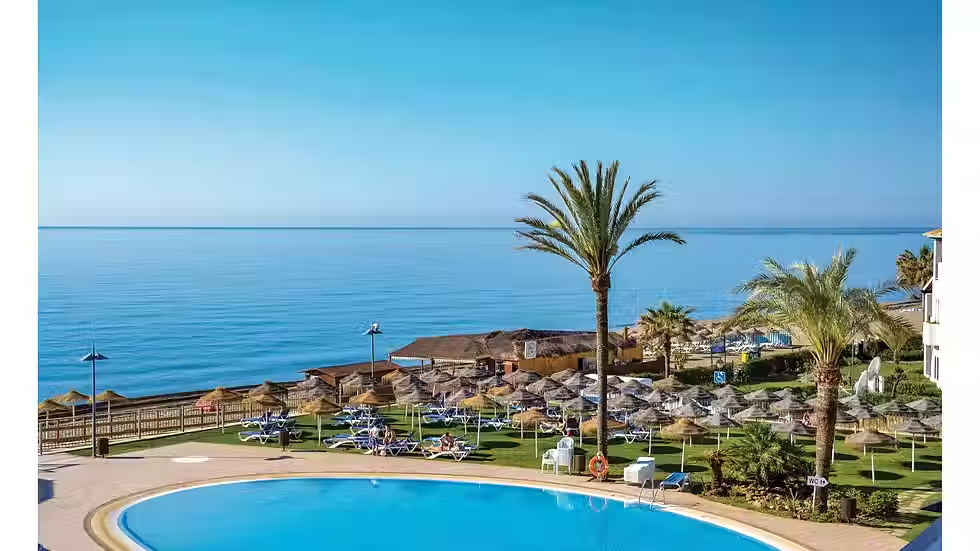
From there, we made our way to our all-inclusive resort: Gran Hotel Costa del Sol. It’s a beachfront hotel with private access to the beach and pool. The rooms and facilities are a bit dated, but when it comes to all-inclusive stays, three things matter:
Food
Alcohol selection
Beach access
This place delivered on all three. We had a clean room, a balcony, and uninterrupted sea views. What it couldn’t fix was the weather!
The pool stayed closed. The sea was far too cold. Sitting by the beach wasn’t exactly inviting with strong winds cutting through everything. After a day, it was clear to us that this wasn’t going to be the holiday we were hoping for. So we did what we usually do when plans fall apart. We explored!
Renting a Car Changed Everything
Public transport around Málaga exists, but it’s limited, especially if you want to explore beyond the city at your own pace. We decided to rent a car on Day 2, and it completely reshaped the trip. Spanish roads are excellent. Spanish drivers? Fast. Very fast. As an Indian driver, it oddly felt familiar, but caution is essential, especially on highways and mountain roads. What followed were some of the most memorable day trips we’ve had in southern Europe.
Granada: Where the Mountains Meet a Thousand Years of History
Our first major drive of the trip took us to Granada, roughly 2.5 hours each way, but it honestly didn’t feel that long. The landscape slowly shifts as you leave the coast and move inland. The air gets drier, the colours turn earthier, and before you know it, the Sierra Nevada begins to rise dramatically in front of you like a wall of stone. Granada has an aura, mysterious, sun‑drenched, and slightly bohemian that makes you feel like you’ve crossed into a different chapter of Spain entirely.
The Alhambra: A World of Its Own
Towering above the city is Granada’s crown jewel, the Alhambra. It’s not merely a palace. It’s an entire world of beauty, symmetry, and storytelling. Built by the Nasrid dynasty, the final Muslim rulers of Spain, the Alhambra is a sprawling complex of palaces, serene courtyards, lush gardens, and protective fortifications that look like they’ve been lifted straight out of a storybook.
The deeper you wander, the more you begin to grasp just how deeply Islamic history runs in southern Spain. It’s etched into every arch, carved into every panel of stucco, wrapped around every column in intricate Arabic calligraphy. There’s a rhythm to the place like geometry, the symmetry, the play of light and shadow, that feels unlike anything else in Europe.

Note: You need to carry a valid physical ID for entry. This is an absolute must, without which you will be denied entry. There are private guides outside offering tours, but they quoted around €150 per couple, alongside the expensive tickets we had already bought. We decided to wing it with Google as our guide!
Ronda: Dramatic, Vertical, Unforgettable
Ronda sits about two hours from Málaga and getting there is half the adventure. The drive winds through mountains, with sharp bends and sudden drops that keep you alert, but also reward you with sweeping views. It’s one of those drives where you tell yourself to slow down not because you have to, but because the landscape deserves your full attention.
First Impressions: A Town on the Edge
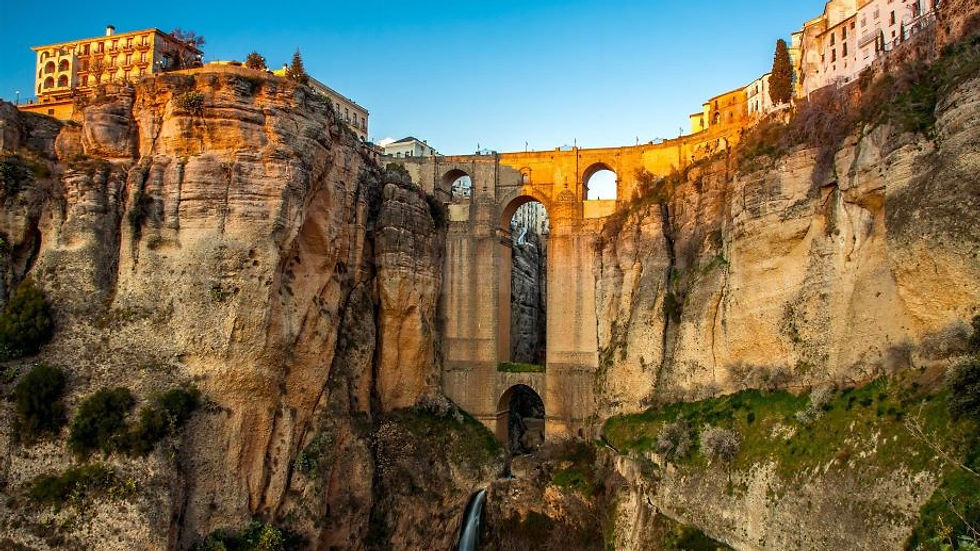
Perched high above deep valleys, Ronda is instantly striking. The town is famous for its dramatic cliffs and the iconic Puente Nuevo, the bridge that spans the El Tajo gorge and divides the old Moorish quarter from the newer town. It’s not just a pretty landmark. It’s soaked in history, myths, and even a tragic love story about a princess and a prisoner who, forbidden to be together, jumped into the gorge, an old tale that still haunts the town’s storytelling. Poets through the ages have been moved by the bridge, and there’s even a wall in the town centre dedicated to verses written about it.
After a beautiful drive amidst the cliffs, we arrived at Ronda around 11 a.m. Now, Ronda is a place you can cover within a few hours by foot. The most exciting thing to do would be the walk down towards the gorge. The walk isn't tiring and can be completed within 45 minutes entirely. The first thing we did was notice how secluded this town was, away from the party hustle and bustle of the rest of Málaga. It's a quiet town on the hill, tucked away between massive valleys. The town is small and has one main road, which pretty much is everything the town is.
Arriving in Ronda
We rolled into town around 11 am, welcomed by calm streets and a peaceful atmosphere that’s completely different from the lively, beachy vibe of the Málaga coast. Ronda feels like a hideaway. Quiet, compact, and perched on a hill, it’s the sort of place you can explore entirely on foot in just a few hours.
Breakfast With a View
Naturally, our first stop was breakfast. We stumbled upon a lively little café right beside the Puente Nuevo and treated ourselves to espresso paired with pistachio cheesecake. Unusual for breakfast? Absolutely. Worth it? One hundred percent. It ended up being one of the best cheesecakes we’ve ever had, and eating it while staring at a centuries‑old bridge felt like the right kind of indulgence.
The Descent Into the Gorge
Once fueled, we started our way down toward the base of the cliffs. Important note: the path directly underneath the bridge leads to a small old prison museum and not the actual trail down into the gorge. This is the spot linked to the tragic lovers’ legend, and it certainly has a distinct, eerie atmosphere.
The real entrance to the gorge snakes through charming old houses and cafés before opening into the trail. Within minutes, the path forks. One route takes you right beneath the bridge, where you get the best photos and also the moment you realise just how enormous Puente Nuevo actually is. There’s a small €10 fee, and helmets are required because tiny stones often fall from above (and yes, you will be grateful you have one).
Standing under the bridge is surreal. It feels both ancient and impossibly grand and knowing that Tom Cruise once shot scenes here adds a random but fun bit of trivia to the experience. We took our photos, soaked it all in, and eventually made the climb back up, still not fully over how impressive the view was.
Fun fact: It’s also a filming location for Knight and Day, starring Tom Cruise and Cameron Diaz, which adds a fun pop-culture layer to an already striking town.
Marbella Old Town: Charm with a Price Tag
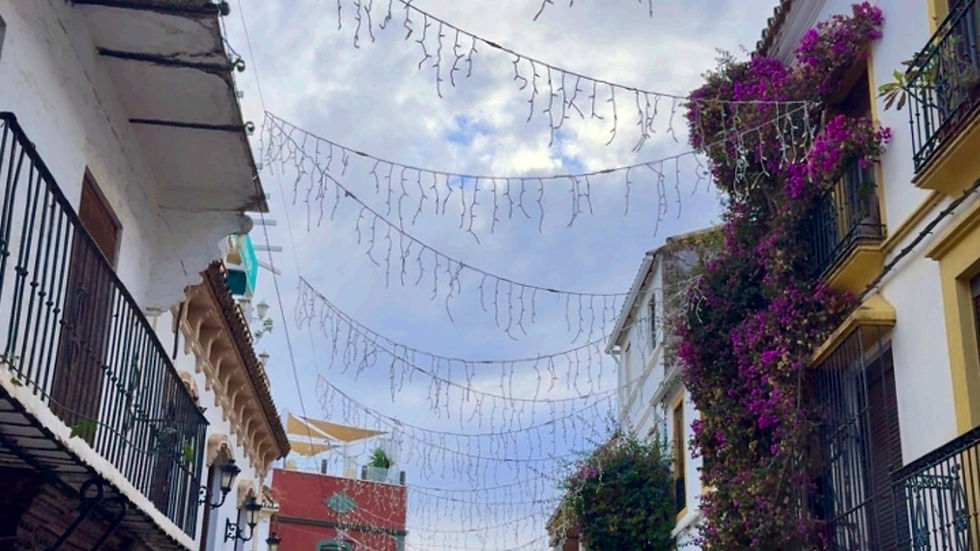
During our time along the Costa del Sol, we carved out an afternoon to explore Marbella Old Town and it turned out to be one of the most picturesque stops of the trip. This little pocket of Marbella is a fast-paced coastal scene. It’s a maze of narrow cobblestone streets, whitewashed houses draped in bougainvillea, orange‑tree‑lined squares, and tiny cafés spilling onto sunlit corners. It’s exactly the kind of place you imagine when someone says “Andalusian charm.”
Tapas Everywhere (But Bring Your Wallet)
Food-wise, you’re spoiled for choice. The area is packed with tapas bars, bistros, and restaurants serving everything from classic Andalusian dishes to modern fusion plates. If there’s a Spanish dish you’ve wanted to try croquetas, gambas al pil‑pil, tortilla, jamón, you name it, you’ll find it here.
Touristy? Yes. Still Worth It? Also Yes.
Marbella Old Town definitely has a touristy side of busy streets, slightly inflated prices, menu boards in five languages yet it’s still a beautiful and worthwhile stop. Think of it as a picturesque afternoon escape rather than a base for everyday dining.
Málaga City: Layers of History
Málaga isn’t just beaches and tapas bars, its Old Town is packed with culture, centuries of history, and some of Spain’s most iconic attractions. During our time on the Costa del Sol, we spent a day wandering through the historic streets of Málaga, weaving between cathedrals, castles, and world‑class museums. Here’s everything we explored (and absolutely recommend).
1. Málaga Cathedral (Santa Iglesia Catedral Basílica de la Encarnación)
The city’s Renaissance masterpiece and famously unfinished. Often called La Manquita (“the one‑armed lady”) because one of its towers was never completed, Málaga Cathedral dominates the skyline with its mix of Gothic, Renaissance, and Baroque architecture. Construction began in the 16th century, right after the Christian reconquest of Málaga in 1487, when the old mosque on the site was converted and later replaced by the cathedral we see today.
2. Picasso Museum Málaga
Picasso’s birthplace and home to over 200 of his works.
You can’t visit Málaga without paying homage to its most famous son, Pablo Picasso. The Picasso Museum, housed in a beautifully preserved 16th‑century Andalusian palace, displays over 200 works spanning all stages of the artist’s career, donated by his daughter‑in‑law and grandson. The building itself, the Palacio de Buenavista is a blend of Renaissance style with hints of earlier Moorish architecture, and even contains archaeological remains from Phoenician and Roman Málaga beneath it.
3. Gibralfaro Castle (Castillo de Gibralfaro)
High above the city sits Gibralfaro Castle, a 14th‑century fortress built by Yusuf I of the Nasrid Kingdom to protect the nearby Alcazaba. The site was originally settled by Phoenicians and Romans, but it was the Moors who developed it into the castle you see today.
A steep but rewarding climb (or an easy bus ride) brings you to panoramic views of the entire city, the port, the mountains, and even the bullring laid out perfectly below. It’s one of those viewpoints that makes you instantly understand why Málaga was such a strategic stronghold throughout history.
4.Alcazaba of Málaga: The Moorish Fortress Above the City
No visit to Málaga feels complete without exploring the Alcazaba, one of the most important and best‑preserved Moorish palaces in Spain. Sitting on the hillside just below Gibralfaro Castle, the Alcazaba offers a fascinating blend of military architecture, palace courtyards, hidden gardens, and sweeping views over the city.
A Glimpse Into Málaga’s Moorish Past
The Alcazaba dates back to the 11th century, built during the Islamic rule of Málaga as a defensive fortress and residence for Muslim governors. Its design follows the classic Moorish emphasis on courtyards, flowing water, symmetry, and geometric beauty that's similar to Granada’s Alhambra, but more compact and fortress‑like. The structure you see today incorporates multiple historical layers, including earlier Phoenician and Roman foundations beneath the site.

Practical Advice (Learned the Hard Way)
If you’re travelling around Málaga:
Rent a car. Public transport won’t give you flexibility.
Book early, especially in peak season.
We used a car rental service called Yellow Cars, and they were excellent:
€180 for 4 days
Brand-new hybrid car
Full insurance
Airport pickup and drop-off
Roughly 60% cheaper than competitors like Hertz or Enterprise
Final Thoughts
This trip didn’t go the way we planned. We didn’t spend long days by the pool. We didn’t swim in the sea. The weather never really settled. And yet, it turned into one of our most memorable trips.
Málaga feels lived‑in, real, and almost underestimated, the kind of place that doesn’t shout about itself but rewards you the more you look. Beyond the beaches, it becomes a city full of stories, viewpoints, flavours, and small discoveries that linger long after you’ve left.
When you stop forcing the postcard version of the trip, it gives you something better. We’ll be back. Hopefully next time, to actually sit still and relax. Happy travels!
Comments